TILT
A tangible tilt-controlled labyrinth installation where a single gesture drives real-time light and generative sound.
TILT is a one-handle micro-installation built for CMS SS26 Interaction Design 1, transforming physical movement into light and sound.
How it works
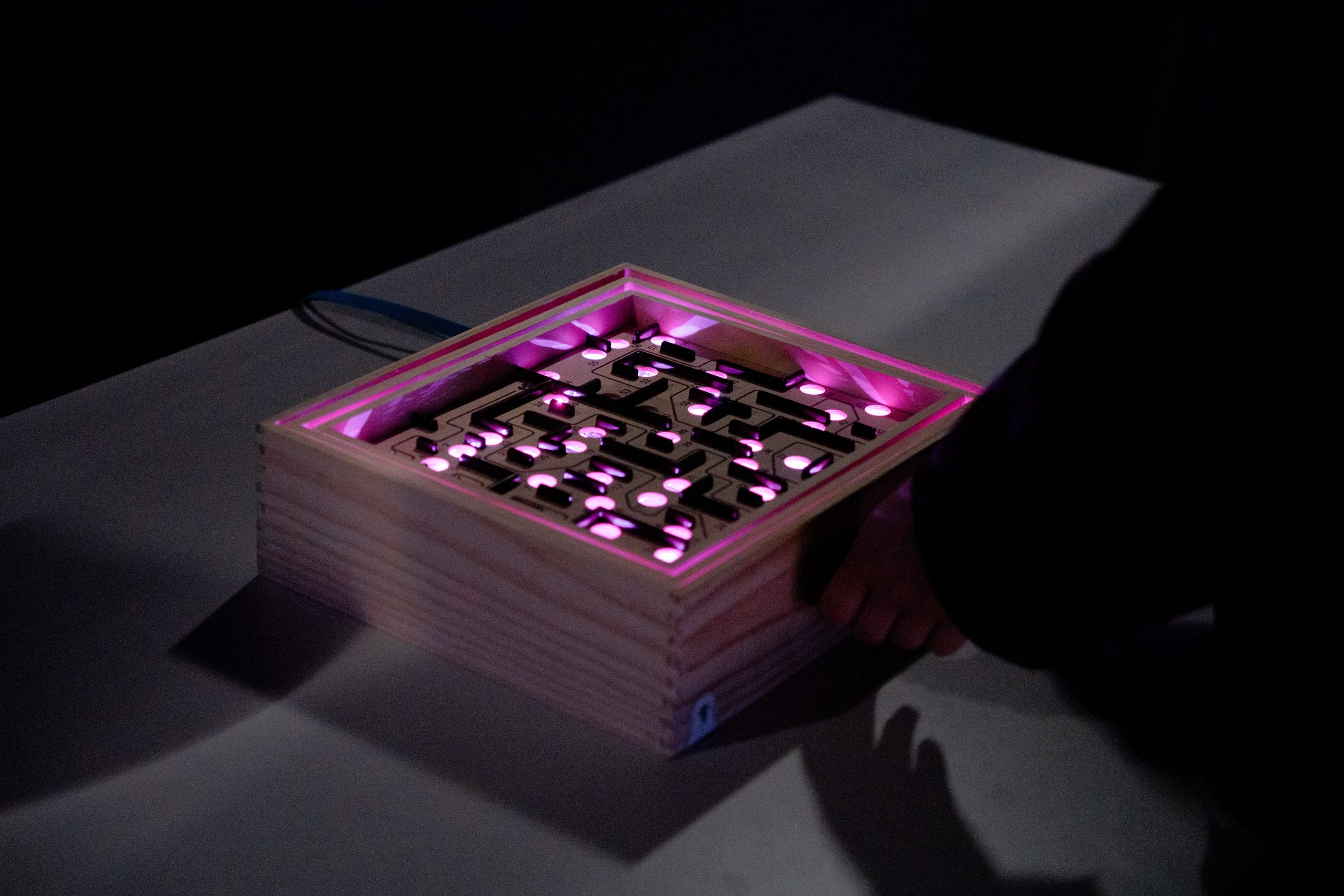
A wooden labyrinth board sits on a plinth; a single side crank tilts it along one axis, and a ball responds to gravity and the tilt angle. An accelerometer under the board, wired to an Arduino, reads the tilt in real time, driving LED strips around the table: light patterns shift with the angle, speed and rate of change of the tilt. A Processing-driven generative soundscape follows the same data, building in density and pitch as the ball moves further from centre, quieting as it approaches rest.
The moment of stillness
A touch sensor at the centre hole detects when the ball arrives; light and sound converge into a synchronised "victory" pattern, then breathe back to idle. The interaction itself, not a score or a timer, is the story.
Reflection
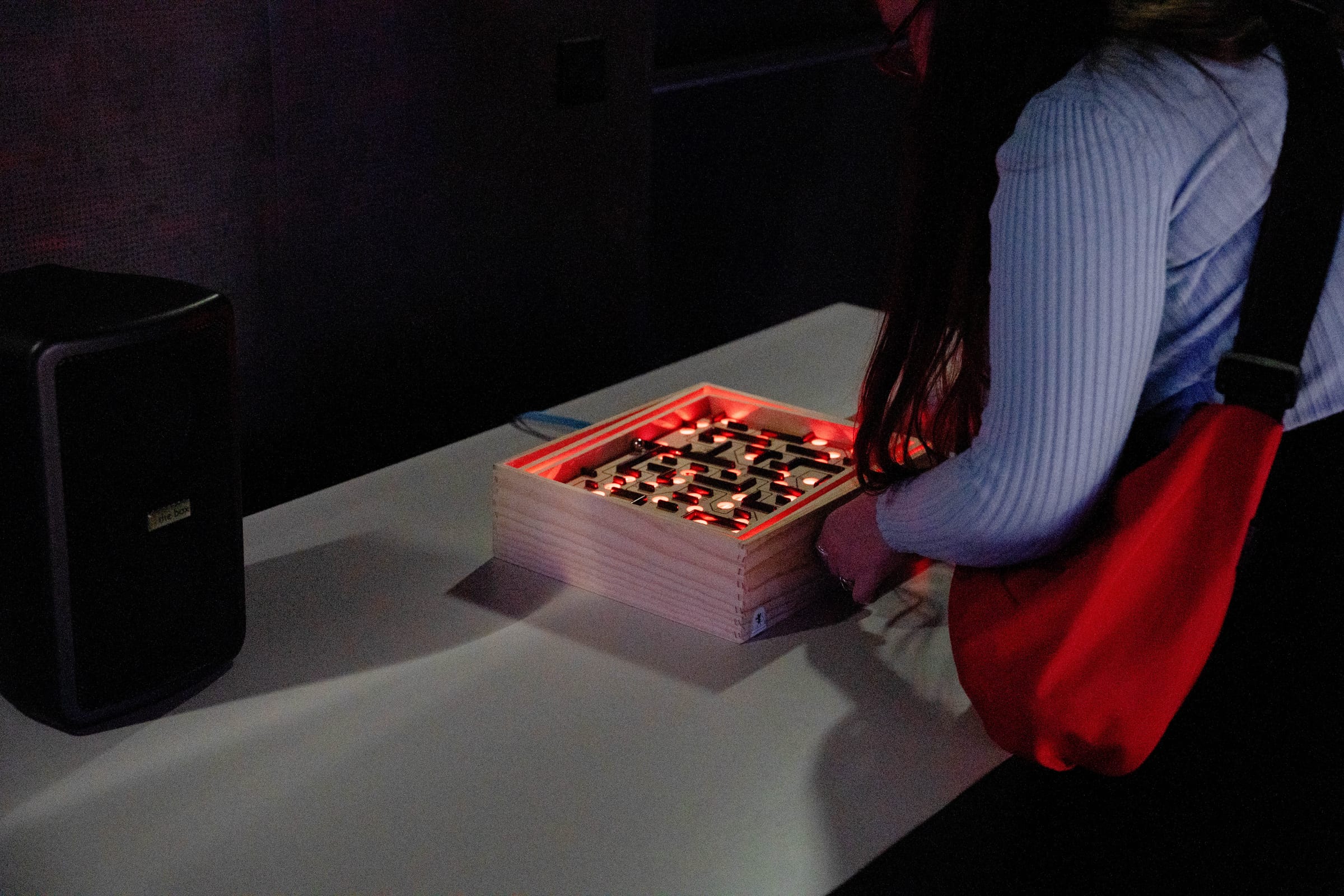
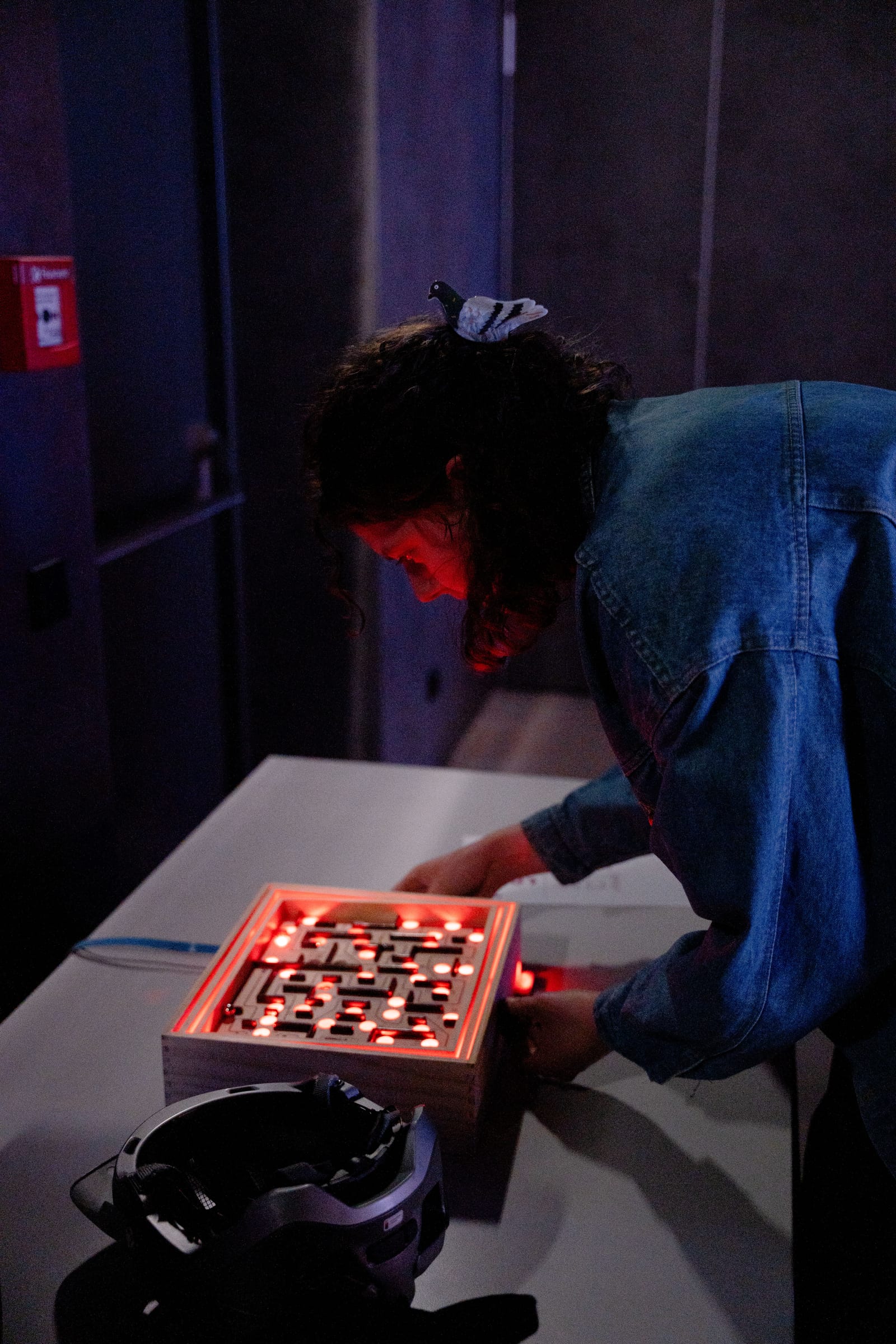
TILT works because the feedback loop is immediate and legible: tilt the board, watch the light shift, hear the sound respond, feel the moment everything resolves at the centre. It's a small, tightly scoped physical-computing piece, but the single-gesture interface, no buttons, no screen, just tilt, is exactly what made it easy for anyone to pick up and understand in seconds.