NEO: Near Earth Observatory
Turning the Kunsthaus Graz BIX facade into a live window on near-Earth space, driven by real NASA, moon-phase and ISS data.
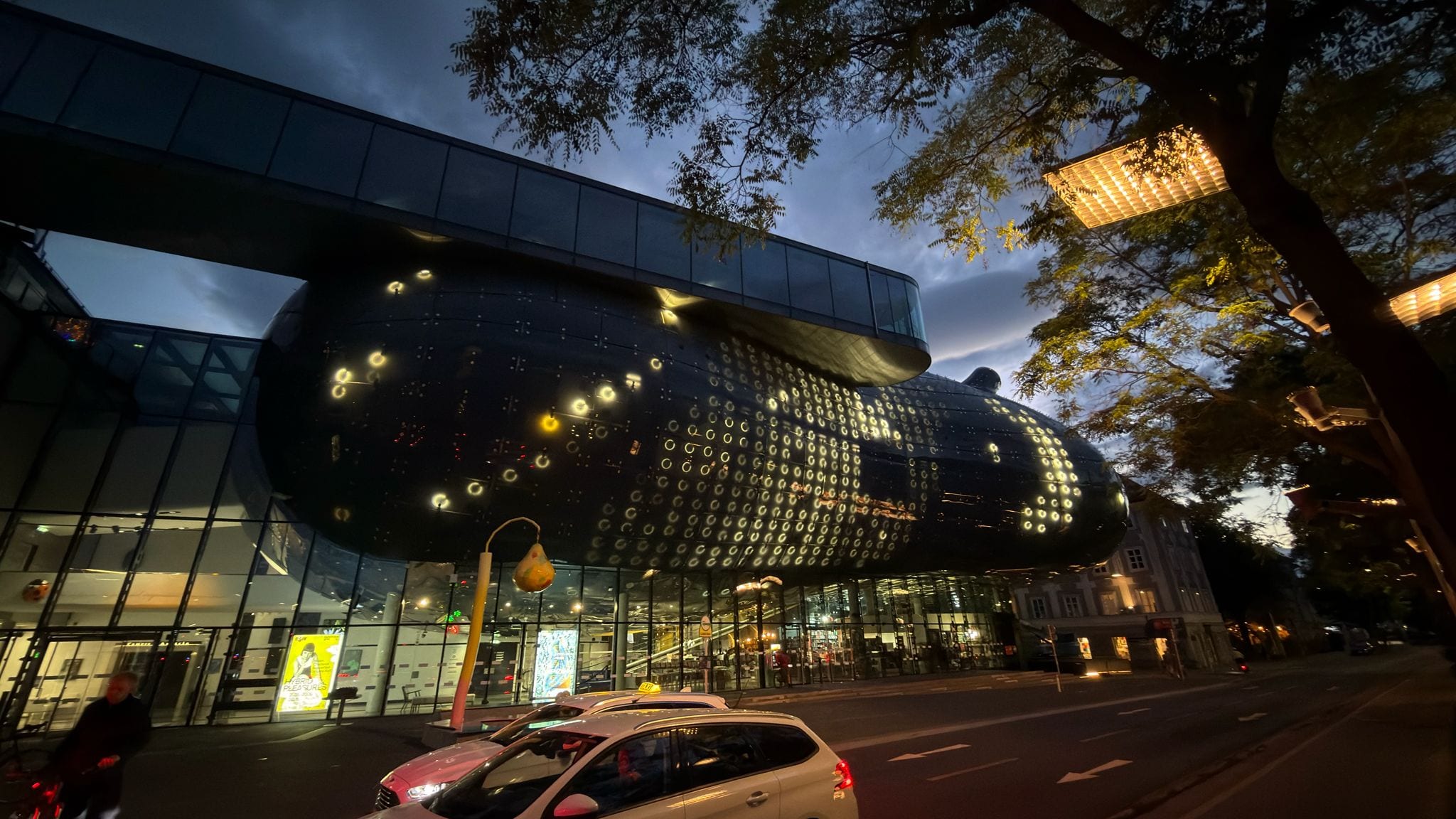
NEO turns the Kunsthaus Graz "Friendly Alien" and its BIX facade, a grid of illuminated rings built into the building's skin, into a window onto near-Earth space.
The idea
The Friendly Alien has come with a message: we are not alone in space, and Earth is constantly surrounded by movement. Meteors and near-Earth objects pass by all the time, often without us noticing. NEO isn't about fear, it's about curiosity. It invites people to look up, pay attention and remember that Graz is part of something much bigger.
Live data
Three live feeds drive the facade: NASA's Near Earth Object API, tracking how many objects pass per day along with their size, distance and speed; a moon-illumination API reporting the real percentage of the moon currently lit; and an ISS position and pass API (via Skyfield), tracking the station's location in real time.
On the facade
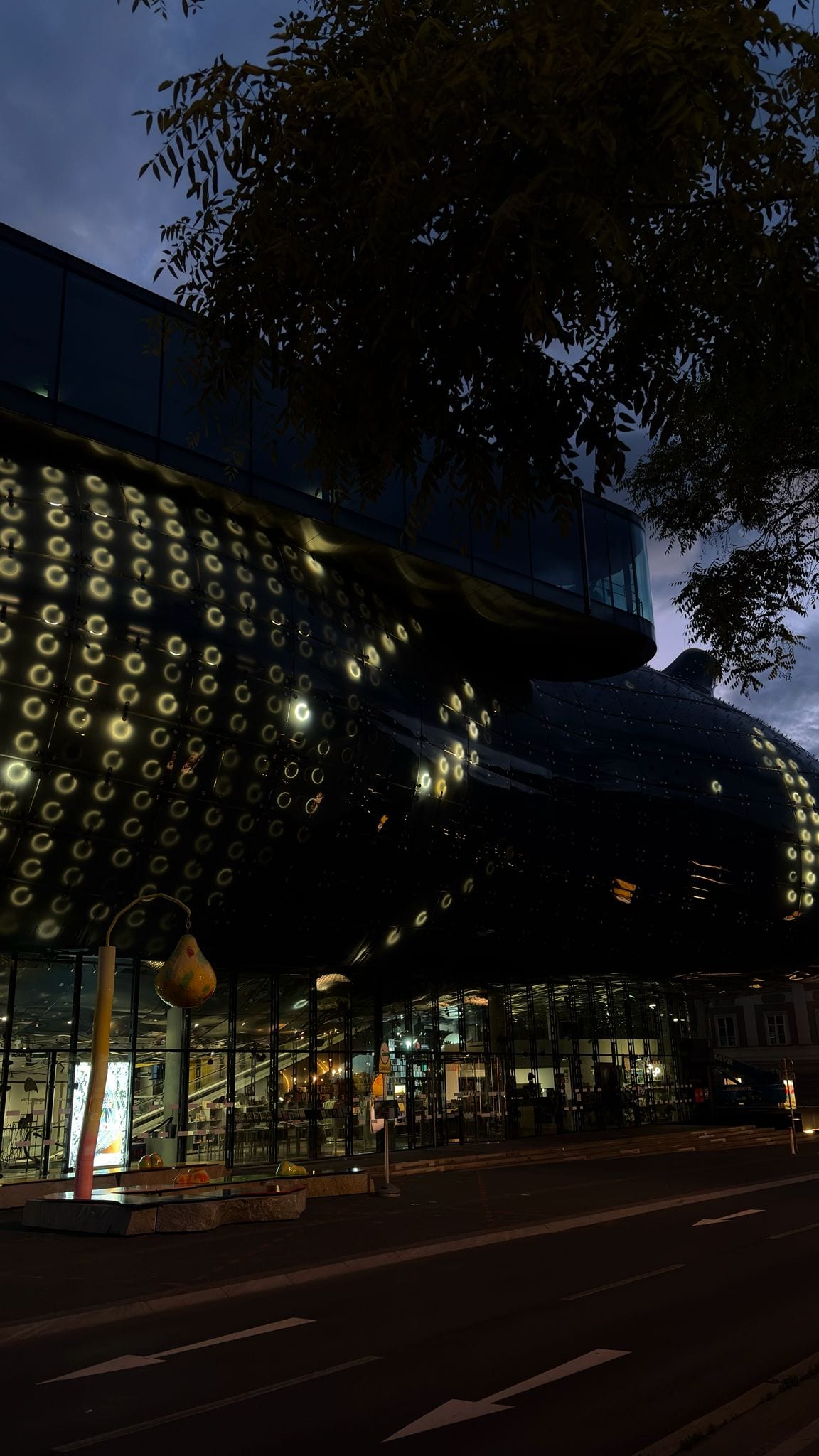
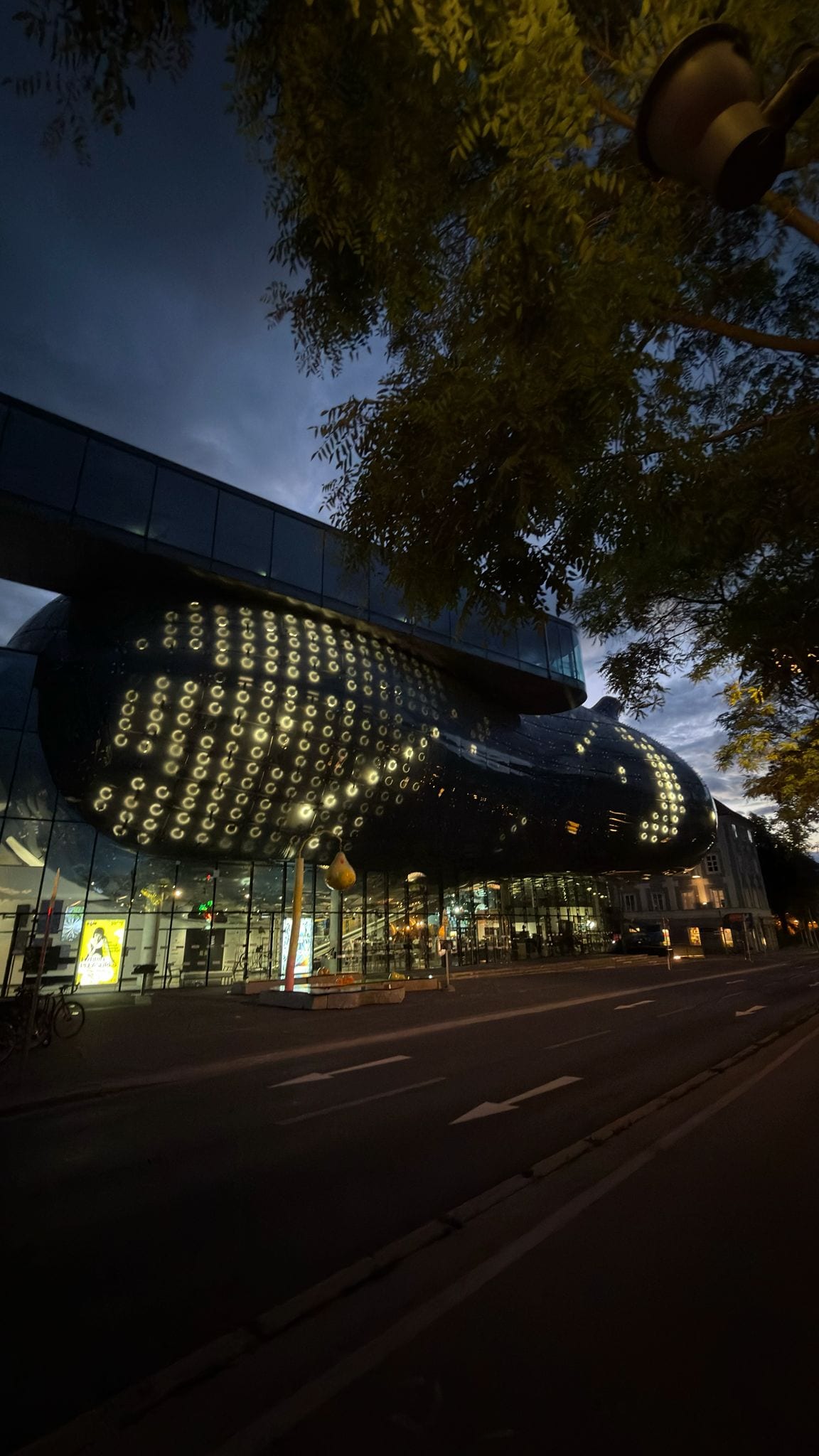
Meteors fly across the BIX facade's grid of rings, and the moon cycles through its actual current phase, both rendered directly from the live feeds, so what plays out on the building is always tied to what's really happening in the sky above it that day.
Reflection
NEO was a one-day university demonstration, projected onto the real Kunsthaus facade to test whether live space data could read clearly at that scale and distance. The strongest part of the concept is the reframing: an unfamiliar dataset (near-Earth objects, moon illumination, ISS passes) translated into something a passerby can read in a glance, motion across a landmark they already know.